can help deliver food aid to a family suffering from hunger can provide vital relief to emergency survivors can implement livelihood programs to set up women-led households for success
Enter Amount
The Worst Climate Disaster in Decades
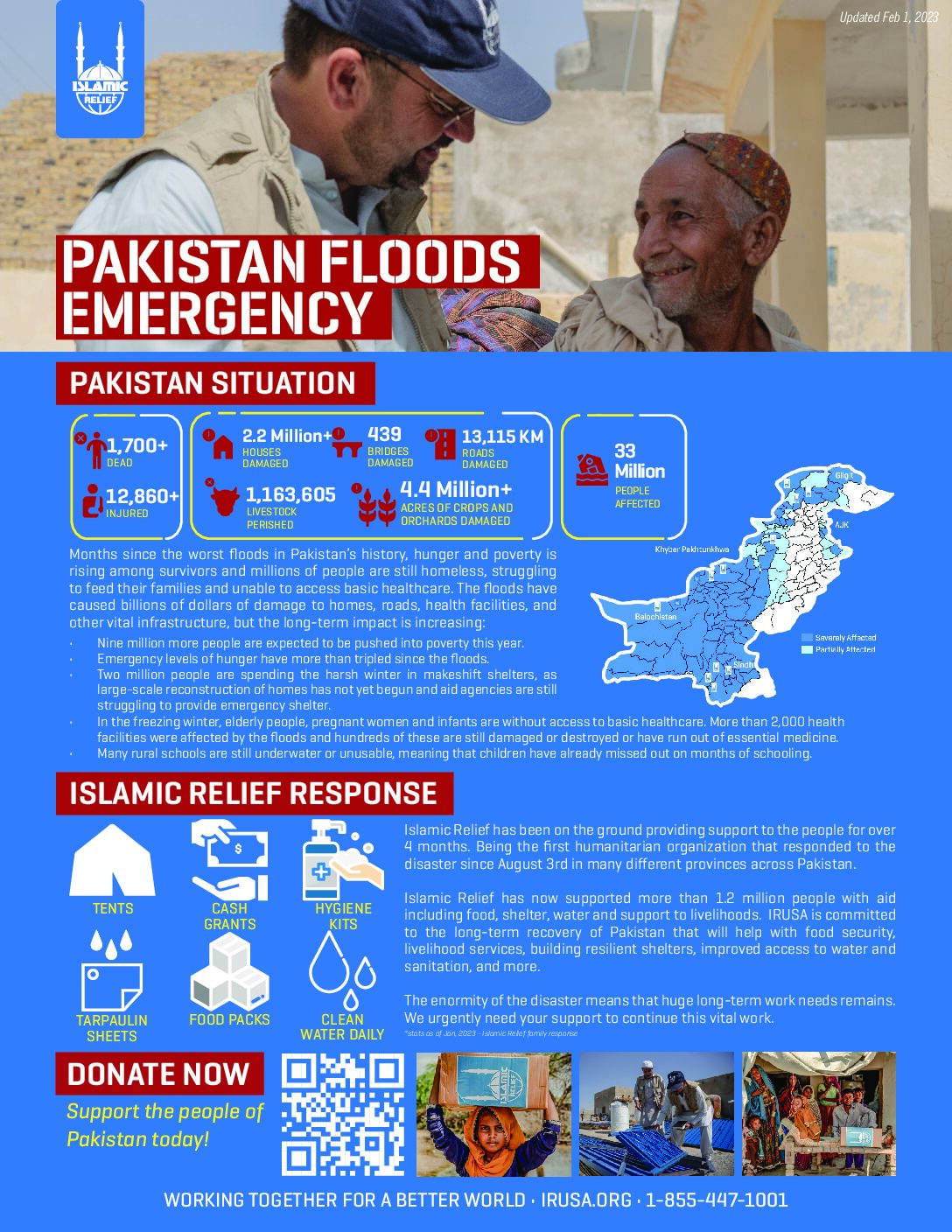
Pakistan has been facing the worst climate disaster in 30 years, despite having a trivial share in the global carbon emission. The rise in global temperatures has triggered unprecedented glacial melting and monsoon rains, causing disastrous floods in all four provinces of the country. One third of the country is submerged and a staggering 33 million people have been affected by this devastating crisis.
“People here are bearing the brunt of global climate change. Pakistan produces less than 1% of the world’s carbon footprint, but its people are suffering the biggest consequences. These are the worst floods that Pakistan has ever experienced and the scale of the devastation here is unimaginable.” – Waseem Ahmad, Islamic Relief Worldwide CEO
Up to 2.2 million people have lost their homes and are without clean water or food, forced to spend their days hungry under the open sky. Over 1.1 million livestock have perished and more than 4.4 million acres of crops have been overtaken by flood waters, ruining the harvest season and decimating food supplies. Vital infrastructure including roads and bridges have been damaged, making it difficult for people to flee as well as receive aid. And a second wave of crisis is imminent as waterborne disease and other health-related challenges are growing rapidly.
The Islamic Relief global family is working together to help survivors of the disaster and ensure long-term support. So far, Islamic Relief has helped upwards of 870,000 people with immediate needs including food, water, hygiene kits, emergency shelter, and cash assistance.
In the coming year, Islamic Relief plans to help rebuild Pakistan through the following:
- Reconstructing damaged homes and infrastructure
- Helping farmers and pastoralists build sustainable livelihoods and revitalize the agricultural sector
- Helping prevent gender-based violence in temporary living shelters through establishing safe spaces for women and children including referral pathways and gender-appropriate sanitation facilities
- Counseling and psychosocial support to address the psychological impact of the floods
Focus on Pakistan
Pakistan has the fifth largest population in the world. The country is sorely affected by political and economic volatility as well as natural disasters caused by climate change, such as the recent floods, all of which have led to food insecurity and chronic poverty. Marginalized groups, especially children, lack proper access to essential services.
In certain parts of the country, agriculture is a main source of income. Without access to water, the livestock suffer and people’s livelihoods are at risk. Islamic Relief is monitoring the situation on the ground. Our immediate response includes access to water; the provision of drought resilient crops and animal fodder for livestock; and health interventions regarding nutrition.
Islamic Relief’s Dedication to Pakistan
Islamic Relief has served in Pakistan since 1992, and continues to provide humanitarian and development assistance across the country today.
A few of our interventions include:
- Food aid
- Access to clean and safe water
- Healthcare for blindness and Hepatitis C, as well as neonatal and pediatric care
- Emergency response for the effects of climate change including drought and floods
- Building sustainable livelihoods including innovative microfinancing plans to help low-income families start businesses
- Widow empowerment